Uncategorized

Uncategorized

“A Bird Can Rest on a Branch Because It Trusts Its Wings”

(Confidence is not in the branch. It’s in the bird.) Have you ever seen a little bird sitting on a thin branch? You feel like, “Arre yeh kab gir jaayega?”The branch is shaking. The wind is strong.But the bird is calm. It’s not panicking. Why? Because it’s not depending on the branch.It knows — even if the branch breaks… I have wings. I can fly. That’s the kind of confidence we all need.Especially when we are learning something new.Especially when we are using something as powerful (and confusing) as AI. Don’t Wait for Everything to Be “Strong” First I’ve seen so many learners wait… “Sir, when my grammar is perfect, I’ll speak.”“Let me finish one more course, then I’ll start practising.”“I’ll use ChatGPT, but first I need to understand how it works fully.” But you know what?Even the strongest branches break. Apps will crash.English partners will disappear.Confidence from outside will always shake a little. But if you trust your own wings… nothing can stop you. Use AI, But Don’t Depend on It Blindly I love AI. I use it every day.It helps us practise English, improve writing, get instant suggestions. But sometimes, people start depending too much. They stop thinking.They ask ChatGPT to write everything.They wait for the tool to say, “Yes, your sentence is correct.” And slowly, they forget… the power is not in the tool.The power is in the learner. Confidence Means: “Even If It Breaks, I’ll Fly Anyway.” You may fumble in front of people.You may make grammar mistakes.You may try a new tool and it may not work fully. That’s okay.Because you’re not just sitting there depending on the system.You’re flying with it, not because of it.Just like the bird.Trust your effort.Trust your instinct.Trust your intention to grow.

Uncategorized

“The Fire Doesn’t Apologize for the Smoke”

(Mistakes are not a problem. Silence is.) Let me tell you something honest today. Every week, I meet amazing learners — smart, sincere, hardworking — but still stuck in one place. Why? Because they want to speak perfectly.They want zero grammar errors.They want to sound like an RJ, with a perfect flow and zero mistakes. So they keep waiting.Waiting to be “ready”.Waiting for that day when they’ll speak without fumbling.But that day… never comes. And that’s when I tell them this: “Beta, fire doesn’t stop just because smoke is coming.” The Fire Burns Anyway. Have you ever seen a bonfire? It doesn’t look polished.It’s not clean. It’s not quiet. It crackles. It smokes. It creates heat, sparks, noise.And yet, everyone feels its power.Its energy. Its warmth. That’s your voice.When you speak — even with mistakes, even with awkward pauses — there’s a fire inside you trying to come out. Yes, there might be smoke — some grammar errors, a wrong tense, a hesitation. But don’t say sorry for that. Fluency doesn’t come from perfection. It comes from persistence. A Real Speaker Is Not the One Who Knows Everything. A real speaker is the one who speaks anyway.Even if there’s some smoke.Even if the voice shakes a little.Even if the words don’t land perfectly. Because courage is what lights the fire.And consistency is what keeps it alive. So don’t say sorry for speaking with mistakes.Say sorry for not speaking at all.

“Even Satellites Need Ground Control”
Uncategorized

“Even Satellites Need Ground Control”

(AI is powerful. But without your vision, it’s just floating metal.) You’ve seen those pictures, right?That satellite, flying way above Earth, spinning silently in space… looks so high-tech, so futuristic, like something far beyond our world. But you know what? Even that advanced satellite — which can click photos of continents, beam GPS signals, monitor climate change — can’t do anything on its own.All its power depends on one small room back on Earth. One humble ground control room.A few people. A few computers.That’s all. Without that room, the satellite is just… floating.Lost. Useless. Directionless. That’s What AI Is. People think AI knows everything.“Yes, ChatGPT is very smart!”“AI can speak like a native!”“AI can write better than humans!” Yes, maybe.But the truth is — AI doesn’t know you. It doesn’t know what you care about.It doesn’t know your goals, your fears, your dreams.It doesn’t know whether you want to speak confidently in interviews or crack IELTS.It doesn’t know if you’re scared of being judged or if you just want to speak to your child’s teacher in better English. That’s where you come in.You are the ground control. Without You, AI Is Just a Tool. See, many people are using AI just to “finish homework” or “generate some content.”They’re impressed by the speed, not realising they’re outsourcing their thinking. But not you. You’re here to learn English. Not just to pass exams — but to speak, lead, express, grow.And for that, AI is a partner, not a master. AI can correct your sentences.But only you can decide what you want to say. AI can give you practice exercises.But only you can bring your energy, your voice, your story. AI can suggest 100 ways to say something.But only you can choose which one feels like you. So, Stay in the Driver’s Seat Don’t be scared of AI.But also — don’t blindly follow it. Use it like a smart friend, not a strict teacher.Use it to explore, not escape. As an English learner, ask: “What do I want to say today?”“How can AI support my clarity, not replace it?”“Am I using AI to grow, or am I hiding behind it?” The Satellite Is Powerful. But Without You, It’s Just Spinning. AI can orbit the sky.But only you can decide the destination. So pick up the mic.Say what you feel.Use AI as your assistant — not your voice.Because you are the ground control.Always.

Uncategorized

“Don’t Be the Uncle Who Laughed at Instagram”

(The AI revolution is real. Don’t dismiss it like social media.) You remember when social media first started becoming big? Instagram, Facebook, YouTube…There was a time when people — especially elders — used to laugh at it.“Bas phone mein ghuse rehte hain ye naye bacche,”“Isme kya future hai? Ye bhi koi kaam hai?” Many parents used to say:“Look at Sharma ji’s son — he’s studying engineering.”And at the same time, they were angry at their own son who was posting reels or gaming online. But what happened later? That same “nalayak” boy is now earning through YouTube.That gamer who was always on PUBG is winning lakhs in competitions.That girl who was making fashion videos is now working with brands. And the same uncles who laughed at “Instagram kids”……started asking their own children:“Beta, tum bhi kuch try karo online?”But by then, it was too late.The early ones had already taken the seats. Now, AI Is Doing the Same Thing This time, the shift is even bigger.And it’s not about dance reels or viral memes. It’s about intelligence. Learning. Future-readiness. AI — like ChatGPT, Gemini, Claude — is not some techy craze.It’s a once-in-a-lifetime shift, just like the internet, just like smartphones, just like social media. But again, what are people saying? “Oh, AI is not for me.”“I’m not a tech person.”“I just want to speak English. I don’t want to deal with this AI stuff.” That’s exactly what people said about YouTube and Instagram in 2013.And look where that mindset got them. Especially for Indians, Especially in Education We come from a system where everything was rote learning. Notes. Teachers. Board exams.We were not trained to learn independently.But now AI is giving us a second chance.With tools like ChatGPT, a learner from a small town who never went to an English medium school can: 1. Practise daily with zero judgment 2. Learn grammar, vocabulary, fluency in real time 3. Get 1:1 conversation feedback without paying 10k per month 4. Become independent, not dependent on expensive classes This is a moment of equalisation.And if you ignore it now, tomorrow you’ll regret it the way many people regretted ignoring social media. So I’m Saying This as Your Mentor, Not Just a Coach: Don’t be the person who mocked Instagram.Don’t be the person who said “AI is not for us.” Be the person who says:“I will not shy away from new technology. I will explore and adapt. I am not lake water. I am river water. I create my path.” Even if you don’t understand the full thing now, start.Explore. Play. Ask AI questions. Practise English with it.Get comfortable.

Uncategorized

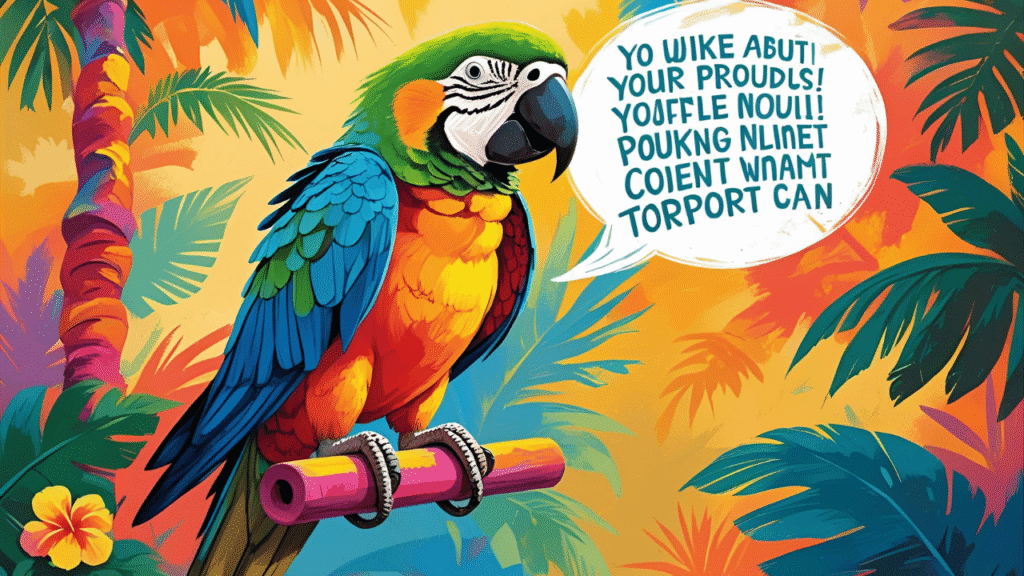
The Parrot Who Knew 1,000 Words

(Real fluency is soulful, not robotic.) Let me tell you a small story. There was once this parrot. Bright green feathers, red beak, super sharp memory.People would gather around to see it perform.It could say 1,000 words. Really. Big words. Fancy English. Even with a slight British accent. People clapped, laughed, took videos. One day, a little girl came to the park where the parrot was kept. She wasn’t there for the show. She was just sitting quietly near the tree, reading a small English poem from her schoolbook. She wasn’t fluent. She wasn’t fast.But the way she read the poem — slowly, softly, with feeling — it touched something.The words weren’t big, but there was meaning.There was emotion. The parrot kept listening.But it didn’t know what to do.It had no response.It couldn’t feel anything.It had all the words — but no understanding. That’s when I realised…There’s a kind of fluency that looks impressive from the outside — but it’s hollow from the inside. How many people are chasing this kind of fluency? They think if they speak fast, use high-level words, mimic some accent, then people will think, “Wow, he’s fluent.”But that’s not fluency. That’s just… parroting. Real fluency is not about showing off. It’s not about stuffing big words into your sentences or sounding like someone on YouTube. It’s about being able to hear a poem—and feel it.It’s about being able to express what’s inside your heart—even if your grammar isn’t perfect.It’s about knowing what you mean—and saying it your way, honestly, clearly, calmly. You see, a lot of people can speak “good English” but still sound robotic. Their sentences are correct, but there’s no life inside them. No softness. No realness. It’s like looking at a picture-perfect dish with no taste. And that’s not what I want for you. You’re not here to become a parrot.You’re here to become a person who speaks with soul.Even if you speak slowly. Even if you forget a word. Even if your accent is desi.That’s okay. That’s real. That’s beautiful. Fluency doesn’t mean “copying.”It means connecting. It means you speak in such a way that someone listens and says, “Haan yaar, I felt that.” And when that happens, it doesn’t matter whether your sentence had an advanced phrase or a simple one.What matters is that it was yours. So here’s something I want you to try:Next time you speak in English, don’t try to sound impressive.Just try to sound honest.Breathe. Think. Feel. And then say what you mean.Not what you memorized. What you mean.Because even a parrot can speak fast.But only a human heart can understand a poem.

Your Voice Is a Painting, Not a Report
Uncategorized

Your Voice Is a Painting, Not a Report

(Emotion > Accuracy. Expression > Grammar.) Most people treat speaking in English like filing a report—correct, accurate, error-free. They worry about grammar, pronunciation, and vocabulary as if they’re submitting an exam. But here’s a truth that can set you free:Your voice is not a report. It’s a painting.It’s not meant to be perfect—it’s meant to be felt. Think of This: A report is flat. It informs.A painting is layered. It moves people. When you speak with tone and emotion, you go beyond correctness. You enter the connection. You make people feel something—curiosity, joy, calm, clarity, excitement. That’s where transformation happens. What Makes a Voice Feel Like a Painting? Let Go of This Myth: Many learners think, “Once I fix my grammar, then I’ll sound confident.”But it’s the other way around.When you start expressing—with emotion, variation, and presence—your grammar improves naturally over time. Not because you study harder, but because you engage more. A Practice for You Take a simple sentence like: “I had a busy day.” Now say it in three different ways: Same grammar. Same words.But the tone changes the story.And that’s what makes your voice a painting. What Confluent Speakers Understand In the Confluent Speaker journey, we don’t wait for grammar perfection to speak. We start speaking with emotion, with rhythm, with intention because connection matters more than correctness.Your voice is not an English test. It’s your presence in the world. Next time you speak, ask yourself: “Am I delivering a report—or am I painting a picture?” Choose expression. Choose emotion.That’s how your voice becomes unforgettable.

Good Listeners Are Like Empty Clay Pots
Uncategorized

Good Listeners Are Like Empty Clay Pots

(They echo what they receive before pouring out anything.) Have you ever tried speaking to someone who’s only waiting for their turn to talk? You speak, but it feels like you’re bouncing off a wall—no echo, no reflection, no space. Now imagine a different kind of person: someone who listens like an empty clay pot. You speak, and their silence receives you. You hear your own thoughts more clearly because they echo them back—not with noise, but with presence. This is the mark of a good listener—and in turn, a truly good speaker. The Empty Clay Pot Metaphor In many wisdom traditions, the clay pot symbolizes humility and readiness. A full pot cannot receive anything. But an empty one? It receives, holds, reflects, and then—when the time is right—pours out. The same is true for speakers. Before you can speak with clarity, power, and connection, you must first learn to listen deeply—to others, to the room, to the unspoken. Why Good Speaking Begins with Good Listening Most people think speaking well is about having the right words. But powerful speakers know it’s about responding, not performing. And to respond, you must receive. Here’s what good listening does: Traits of a Confluent Listener Just like we speak about becoming a Confluent Speaker—confident, fluent, and independent—we must also cultivate the qualities of a Confluent Listener: A Practice for You In your next conversation, try this: You’ll be surprised. The more you listen, the more powerful your speaking becomes. Being a good listener isn’t a “soft skill.” It’s a superpower. In a world that’s noisy, reactive, and fast, the one who listens well becomes the one who speaks with impact.Because good speakers don’t start with their voice.They start with their ears.

Uncategorized

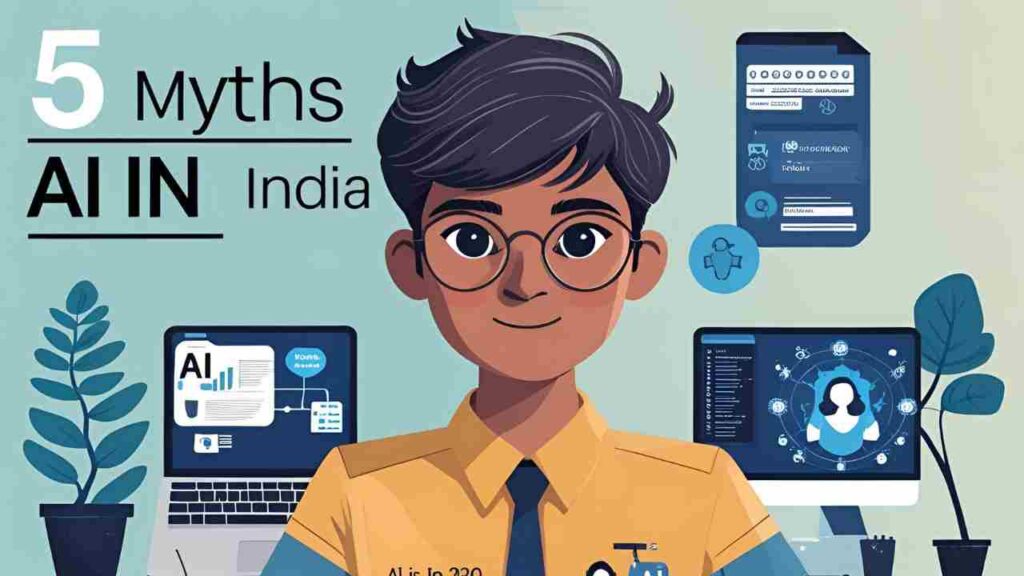
5 Myths About AI in India

The 5 Most Common AI Myths in India—and Why They’re Holding You Back AI has arrived in India—and it’s not just in big cities or high-tech companies anymore. I’ve spoken to schoolteachers, business owners, IT professionals, and even college students from small towns. And what I keep hearing is hesitation. Doubt. Confusion. Many people still feel AI is “not for them.” They’ve heard things like “AI will take our jobs” or “It’s too expensive”—and they’ve believed it. But here’s the truth: these are myths. What Is a Myth, Really? Let’s start with this English word: myth.A myth is a story people believe even when it’s not fully true. It feels real because it’s been repeated so many times. The word comes from the Greek mythos, meaning a tale or a narrative. And like all stories, myths have power. They shape how we think. They either open doors—or block them. When we believe myths about AI, we stop ourselves before we even begin. We hold back from exploring, from learning, and from growing. And in doing so, we miss out on opportunities. Now let’s break down the five most common AI myths in India—and understand why they’re not true. Myth 1: AI Will Steal All Our Jobs Why people believe it: The media shows robots replacing humans, and fear spreads fast.The truth: AI is designed to handle tasks, not entire roles. It works best with humans, not instead of them. For example, a teacher who uses AI to prepare lessons can focus more on students. A marketing executive who uses AI for research can spend more time creating strategy. Just like the computer didn’t replace workers—it changed how they worked—AI will do the same. The people who learn how to work with AI will move ahead. The ones who ignore it may struggle to keep up. Myth 2: AI Is Only for Techies and Coders Why people believe it: AI sounds technical and complicated.The truth: If you can use WhatsApp, you can use AI. Today’s AI tools don’t require coding. They’re built for everyday users—teachers, artists, writers, students, salespeople, and yes, English learners. You simply type what you want, and AI responds. Whether it’s ChatGPT helping you write a paragraph or Google’s AI helping you organize tasks—you don’t need to be a tech expert. You just need a curious mind. Myth 3: AI Tools Are Expensive Why people believe it: They assume “high-tech” means “high cost.”The truth: Most popular AI tools have free or low-cost versions. ChatGPT has a free plan. Grammarly, Google tools, and many learning apps offer basic versions at no charge. The real cost isn’t money—it’s curiosity. If you’re willing to spend time exploring, AI can actually save you money on tuition, resources, and time. It’s one of the most affordable learning partners you can have. Myth 4: AI Will Make Learning Lazy Why people believe it: They think AI will do all the work and make them passive.The truth: Laziness doesn’t come from tools—it comes from mindset. When used right, AI actually encourages deeper learning. Imagine this: you speak a sentence, and AI corrects it instantly. You ask a grammar question, and AI explains it clearly. You want to practice speaking, and AI gives you examples and feedback. AI doesn’t replace your effort—it rewards it. It becomes your silent, always-available learning coach. Myth 5: AI Is Not for Indian Languages or Learners Why people believe it: They think AI only understands English or foreign cultures.The truth: AI has already learned to speak with us—in Hindi, Tamil, Bengali, Marathi, and even Hinglish. Platforms like ChatGPT understand Indian accents, idioms, and context. Indian start-ups are building tools in regional languages. The future is not just global—it’s glocal: global technology that works in our local voice. The earlier we start using it, the more we can shape it to suit our needs. My Suggestion: Don’t Let a Myth Hold You Back Every new technology goes through this stage. People feared online payments, and today UPI is a daily habit. People doubted social media, and now it’s central to business and connection. AI is at that same moment—right now. If you still believe these myths, you risk standing still while the world moves forward. But if you let go of them, you step into something powerful: a future where learning is faster, communication is stronger, and opportunities are wider than ever before.AI isn’t here to take your place—it’s here to take you further.Don’t be left behind. Be curious, be open, and become fluent—not just in English, but in the language of the future.

Uncategorized

What a Bird Weaving Its Nest Teaches Language Learners About Practice & Mindset

Sometimes, the best lessons on growth don’t come from textbooks or teachers, but from nature. Watch a bird build its nest, and you’ll see a quiet wisdom at work. No rush, no drama. Just steady movement, one twig at a time. For language learners, especially those walking the path of the Confluent Speaker, this simple act holds a powerful message about practice, patience, and mindset. A Nest Isn’t Built in a Day One twig at a time. One failed attempt after another.No shortcuts. No complaints.Just instinct, effort, and trust in the process. Language learning works the same way. You don’t wake up fluent. You build fluency in layers—one phrase, one sentence, one conversation at a time. The process is slow. But it’s steady. And if you trust it, it works. The Bird Doesn’t Ask, “Am I Fluent in Nest-Building?” It doesn’t question its ability.It doesn’t compare nests.It just starts—with what it knows—and keeps going till it’s done. As learners, we often overthink. “Am I good enough?” “What will people say?” “Will I ever be fluent?”But the truth is, fluency isn’t something you wait for—it’s something you build by starting, right where you are. Practice Isn’t About Perfection—It’s About Persistence Every stick placed wrong teaches balance.Every windy day teaches strength.Fluency works the same way: mistakes are not failure—they are feedback. The bird doesn’t stop building just because one twig falls. In the same way, don’t stop speaking just because you made a mistake. Every awkward sentence, every wrong word, every silence teaches you something—if you let it. Mindset Is Instinct + Belief The bird doesn’t have coaching.It doesn’t need external motivation.Its mindset is simple: “I am meant to do this.”What if you believed that about your speaking? What if you stopped waiting to “feel ready” and simply started speaking—trusting that the ability is already inside you? No Audience. Still, It Builds. The bird doesn’t wait for applause.It doesn’t post progress.It builds because it must. You don’t need praise to practice. Let your speaking practice be personal, sacred—even if no one claps, corrects, or notices. Speak for yourself. That’s where real growth begins. Progress Isn’t Obvious—Until It Is For days, it looks like nothing is happening.Then one morning, there’s a home in the trees. Language learning often feels the same. For weeks, you may not see improvement. But then suddenly, you say something clearly. You understand a joke. You hold a conversation without pausing. That’s when it clicks—the nest is forming. Build Your Fluency Like a Bird Builds Its Nest With quiet commitment.With faith in small actions.With joy in the doing—not just the result. Let every sentence you speak be a stick in your nest. Let every moment of courage, every attempt, be part of your construction. You are not just learning English. You are building your fluency—your ability to express, connect, and live freely. You’re Not Behind—You’re Just Building Stop comparing your speaking to someone else’s nest.They’re just at a different stage.You’re not late. You’re not lacking.You’re just in the middle of the build. And that’s okay. The Confluent Speaker doesn’t rush the process—they honour it. Fluency Is a Nest You Build from Within It’s not a certificate. Not a number.It’s your ability to express, connect, and live freely. And like the bird, you already have what it takes. The instinct. The raw material. The need to communicate. Now, just begin.Speak. Try. Build.Your nest is waiting.

Why I Think Shah Rukh Khan Is the Most Confluent Speaker in India
Uncategorized

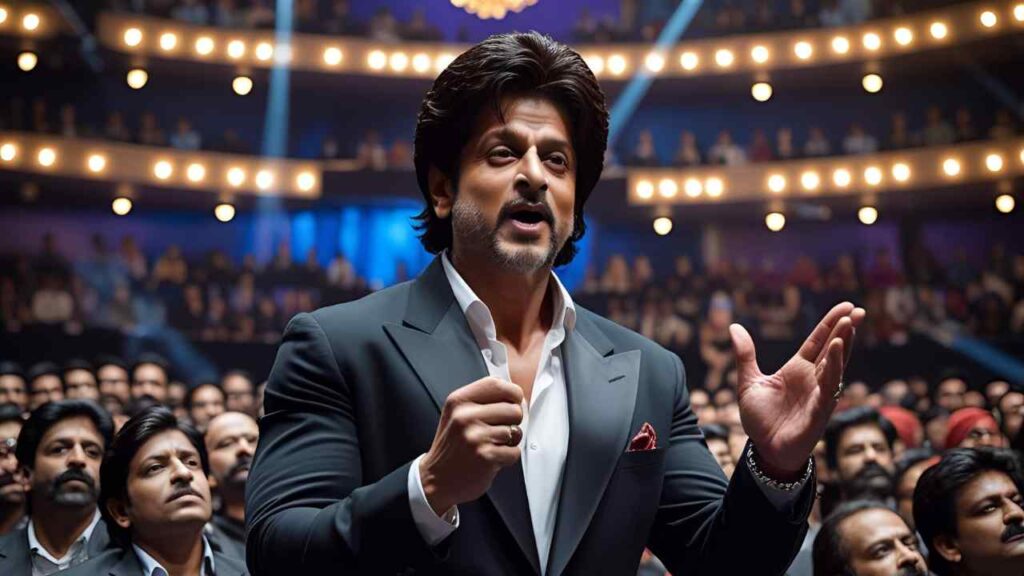
Why I Think Shah Rukh Khan Is the Most Confluent Speaker in India

Why I Believe Shah Rukh Khan Is India’s Most Confluent Speaker Shah Rukh Khan isn’t just an actor—he’s a master communicator. His interviews, speeches, interactions, and presence show something more than fluency in language. They reveal the power of Mindset, Knowledge, Practice, and Feedback—the very foundation of the Confluent Speaker Framework (MKPF). When I talk about being Confluent, I don’t just mean speaking fluent English. I mean speaking with clarity, confidence, connection, and courage—no matter the language or setting. And if there’s one public figure who embodies this spirit, it’s Shah Rukh Khan. Let’s break down why he’s not just fluent… but Confluent. 1. Mindset: The Power of Belief and Confidence SRK’s confidence is legendary. From his early TV days to becoming the King of Bollywood, one thing has remained constant—his belief in himself. Mindset is the first pillar of the Confluent Speaker Framework. And Shah Rukh shows us that it’s not about waiting to feel “ready”—it’s about believing that you already have something worth saying. Whether he’s addressing a stadium, a film set, or a college auditorium, he brings the same energy: “I belong here.”That belief fuels progress—and that belief is where fluency truly begins. 2. Knowledge: Reading, Learning, and Gaining Perspectives SRK is famously well-read. His bookshelf spans literature, philosophy, business, politics, and more. But knowledge, for him, is not just about collecting information—it’s about understanding the world, people, and himself. As Confluent Speakers, our words carry more power when backed by real thought. When we read, explore, reflect, and stay curious, our communication becomes richer. Like SRK, we don’t just share facts—we share perspectives. 3. Knowledge: Meeting People and Experiencing the World SRK’s understanding of people doesn’t come only from books—it comes from life. From global travels to deep conversations with diverse individuals, he has seen the world up close. Real fluency doesn’t grow in isolation. It grows when you meet new people, hear new stories, and step outside your bubble. The more you expose yourself to new cultures and contexts, the more naturally and confidently you’ll express yourself—just like Shah Rukh does on any stage, anywhere in the world. 4. Practice: A Lifetime of Speaking and Performing Every Confluent Speaker knows: fluency is built through repetition. And SRK has had decades of it. Acting, interviews, talk shows, fan interactions—his communication skills have been shaped by constant use. He didn’t become comfortable on stage overnight. He practiced. He failed. He improved. And over time, his voice became powerful—not just because of what he says, but how he says it. If you want to be Confluent, follow this: Speak often. Speak boldly. Speak consistently. 5. Feedback: Learning from Mentors and Critics SRK is not just a performer—he’s a learner. Throughout his career, he’s taken feedback from directors, mentors, and even his close circle. He listens. He adjusts. He grows. That’s the fourth pillar of MKPF: Feedback. You don’t wait for perfect English. You speak, receive feedback, make corrections, and grow. Shah Rukh’s willingness to be corrected, to learn on the go, is a key reason why his communication stays relevant, real, and relatable. 6. SRK’s Ability to Connect: The Heart of Confluence Watch him in an interview, or even a casual interaction—he doesn’t speak at people, he speaks to them. SRK’s emotional intelligence shines in the way he connects. He adapts his tone, energy, and words depending on who he’s talking to. That’s the heart of Confluent Speaking—not just delivering lines, but creating emotional resonance. People don’t remember every word—but they remember how you made them feel. And that’s where SRK wins, every time. 7. Confluent Speaking Is More Than English Yes, SRK is fluent in English. But that’s not what makes him powerful. What makes him Confluent is his ability to speak with impact in any language—be it Hindi, English, or a beautiful mix of both. He switches registers, blends styles, and moves between audiences with ease. That’s the real definition of fluency—not perfection, but presence. Not grammar, but grace. Not memorised lines, but meaningful messages. 8. SRK’s Legacy: Inspiring Millions Through Voice and Vision Shah Rukh Khan has inspired millions—not just with his acting, but with his words. His story is one of self-belief, discipline, and fearless expression. And through that story, he teaches us this: confidence is built, not born. Fluency is earned, not gifted. He’s not just a celebrity—he’s a living example of what it means to communicate with power, purpose, and heart. 9. SRK’s Message to You: You Are Already Fluent If you’re reading this and thinking, “But I’m not like Shah Rukh”—pause. SRK didn’t start where he is now. He started with belief. Then came knowledge, practice, and feedback. You have the same path available to you. You don’t need to be perfect. You just need to start.Believe in your voice. Use the tools you have. Keep speaking, keep learning.Fluency is already within you. Start today because “kal ho na ho”

Scroll to Top