
Author name: Ziaur Rehman

Knowledge

AI vs. HI

Artificial Intelligence vs Human Intelligence Hey everyone, Let’s chat about something exciting today—Artificial Intelligence (AI). You’ve probably seen how AI tools are everywhere, especially in language learning. Apps that correct your grammar, suggest fancy words, or even chat with you like a chatbot. Pretty cool, right? But here’s the big question: Can AI really replace the human touch in communication? The short answer? Nope. Not even close. Yes, AI is changing the way we learn, but it’s no match for what you bring to the table as a human being. And that’s where our MKPF framework (Mindset, Knowledge, Practice, Feedback) stays rock solid, even in this AI-driven world. Let me explain. What AI Does Well AI can do some pretty cool things for language learners: It’s like having a super-fast assistant. And for beginners, tools like these can be helpful—they’re great for practice on the go or brushing up on basics. But here’s the thing. AI doesn’t actually understand you. It doesn’t know what you’re trying to say beyond its programming. It can correct a sentence, but it can’t teach you how to sound natural, confident, or emotionally connected when you speak. Why Human Intelligence Wins Every Time Human intelligence wins because we can express ourselves in a way that AI can’t. We can connect with others on a deeper level, and we can use our creativity and imagination to express ourselves. AI can’t do that. Communication is all about connection, not just grammar or vocabulary. It’s about how you make people feel when you speak, and that’s something AI can’t do. Think about it: In short, language isn’t just a skill—it’s a reflection of who you are. AI can assist, but it can’t replace you. Why MKPF Will Always Be Relevant This is where the MKPF framework shines because it focuses on what really matters: building your confidence and fluency as a human communicator. MKPF isn’t just a system—it’s a journey to becoming an independent, confident speaker. AI may assist, but we’re here to make sure you own your fluency. AI and Humans Together: The Best of Both Worlds Let’s be clear—AI isn’t the enemy. It’s a great tool when used wisely. It can make your learning journey faster and more efficient. But tools can only take you so far. In the end, it’s your mindset, creativity, and practice that will set you apart. AI might help you polish your grammar, but the real magic happens in our sessions, where you connect, share ideas, and speak with confidence. Your Voice Matters As we embrace AI, let’s not forget what makes us unique—our ability to connect on a human level. Language isn’t just about saying the right words; it’s about expressing who you are. So yes, use AI as a tool if it helps. But remember, you are the real power behind your fluency. And with MKPF, you’re not just learning English—you’re mastering the art of being a confident, fluent speaker who stands out in a world full of machines. Keep speaking, keep growing, and keep inspiring. AI may be smart, but your voice? It’s irreplaceable. Ziaur RehmanYour Coach and Fellow Speaker

Knowledge

Confidence Levels: Seeing the Bigger Picture

Understanding where you stand as an English speaker can sometimes feel confusing. These levels are not rigid labels or tests to judge your ability—they’re simply a way to give you a clearer picture of your journey. Think of them as milestones that help you recognize your current strengths and identify areas where you can grow. Whether you’re just starting or already speaking comfortably, these levels serve as a guide to help you move forward with purpose and confidence. Let’s explore these stages together and see which one resonates with your current speaking experience! Confidence Levels Level 1: Fearful BeginnerAt this stage, you might feel nervous or even scared to speak English. You may worry about making mistakes and avoid speaking in public or with others. It’s okay to feel this way because you’re just starting your journey. Focus: Push past the fear and practice speaking, even if it’s just a few words or sentences. Speak in safe environments with people you trust. Progress, not perfection, is your goal here. Level 2: Cautious SpeakerYou’re now able to speak in English, but you still hesitate or second-guess yourself. Mistakes might still feel intimidating, but you’re taking more risks. Focus: Speak with less hesitation and on more varied topics. Celebrate small wins, like holding short conversations or asking questions confidently. Level 3: Comfortable CommunicatorNow, you’ve reached a point where you’re comfortable engaging in conversations. You no longer overthink grammar or fear mistakes. Casual chats come naturally, and you’re starting to hold your own in discussions. Focus: Push your comfort zone by speaking in unfamiliar situations. Build versatility in your language, allowing you to discuss different topics with ease. Level 4: Confident CommunicatorAt this stage, you’re confident in almost any situation—casual, academic, or professional. Mistakes don’t intimidate you anymore because you’ve embraced them as part of growth. Focus: Refine your language for greater fluency, precision, and impact. Tackle more challenging conversations and polish your skills for high-level communication. Your Confidence JourneyRemember, confidence isn’t about reaching the top of the ladder overnight—it’s about climbing steadily. Each level is a milestone worth celebrating, and every small step forward is progress. The most important lesson? Confidence comes from consistent effort, not quick fixes. By focusing on where you are today and taking intentional steps to improve, you’ll find yourself speaking English with ease and authenticity. So, take a moment to reflect: Which level do you think you’re at right now? Start there, and let your journey unfold naturally. You’ve got this! Your coach,Ziaur Rehman

Mindset

Fluency in Future?—The Fluency Levels

I want to shift the way you think about fluency. Instead of seeing it as something far in the future, something you’ll achieve one day, start seeing it as a present reality. The truth is, you are already fluent. It doesn’t matter if you’re just starting out or if you can express yourself in simple phrases. That’s fluency. And it’s your foundation. This mindset shift is a game changer. By recognizing that fluency exists at every stage, you stop feeling like it’s something to chase and start realizing that you’re already on the path. You can build on what you have, level up from where you are, and keep going. You don’t need perfect English to be fluent. You just need to speak with confidence, with the skills you’ve already developed. And then, step by step, you take it higher. From basic fluency to conversation fluency to professional and academic fluency, each level is just an upgrade, not a distant dream. This is what I want for you: to stop worrying about “how much more you need to do” and start appreciating where you are right now. Because right now, you’re already speaking—fluently. And that, my friend, is the first victory. Now, let’s find your level and level up: The Different Levels of Speaking Fluency: Level 1 – Basic FluencyAt this foundational level, you can effectively communicate basic needs and understand simple conversations. This is often referred to as “survival fluency” as it enables you to navigate everyday situations with limited language use. Level 2 – Conversational FluencyAt this stage, you are able to engage in everyday conversations about familiar topics. You may still make occasional errors in vocabulary or grammar, but you can express yourself and understand others in a variety of common scenarios. This level represents practical fluency in regular interactions. Level 3 – Social FluencyHere, you are comfortable in both casual and slightly formal conversations. You can comprehend humor, express opinions, and participate in discussions without significant hesitation. Social fluency enables you to engage in most types of social interactions without feeling restricted. Level 4 – Professional FluencyAt this level, you can manage more complex topics, deliver presentations, and use specialized language relevant to your field. While minor mistakes may occur, they do not impede effective, professional communication. This level is crucial for those aiming to succeed in the workplace or professional settings. Level 5 – Academic FluencyThis level signifies a high degree of fluency where you are able to discuss not only everyday topics but also abstract, theoretical, and academic concepts. You can understand and contribute to in-depth conversations, lectures, and debates on a variety of subjects. Level 6 – Native-Like FluencyAt the highest level of fluency, individuals can converse naturally on any topic, using idiomatic expressions, humor, and cultural references with ease. Achieving native-like fluency is challenging and typically the result of many years of immersion and practice. This represents the pinnacle of language mastery. From today, never say you want to become fluent. You are already fluent. You just need to level up. This shift in your perspective can be magical if you realize its potential. What is Your Current Fluency Level?

Practice

Confidence Is A Journey; Not A Destination

Confidence is the result of your efforts. You can’t wait to become a confident speaker first and perform later. You get to perform first and once you perform and practice enough, confidence comes automatically. Confidence in your communication is the result of your practice and speaking experience. I am a spoken English coach for many years now. And I think I am very confident. How did I become so confident? Was I born with it? No. I boosted my confidence little by little, day by day, opportunity by opportunity. My father used to take me to Mumbai’s famous, Tata literature festival and Times literature festival every year. There we used to listen to many authors, artists, and performers. We, as an audience, almost always had an opportunity to ask questions to our favorite authors and artists after or during their panel discussion. There, my father always pushed me to raise my hand and ask questions to those panelists. I used to hate it sometimes. I used to be scared of standing in a hall packed with people and asking question on a mic. Forget asking questions, I used to be scared of even raising my hand asking for the mic from the volunteers. But I did anyway. And after doing it a few times, I realized that no one laughs at you (even if they do, it doesn’t matter). No one cares about your poor English (they have better things to worry about). No one gives a damn about your poor pronunciations (we are Indians and English is not our mother tongue. It’s totally OK to not know it perfectly). And the best part, the authors and artists always responded to my questions with respect irrespective of my communication skills. And learning that lesson, I never avoided any speaking opportunity because of fear. I am not saying I am not scared of public speaking. I am. But I do it anyway. And the more I do it, more confident I become. (My father and I at Mehboob studio. Times literature festival. Some years back.) When I took my first few sessions as a language teacher, I was so scared of my presentation and content and explanation and so many other things. But I never quit my job because of that fear and nervousness. I rather conducted the sessions anyway. And today after so many years of teaching and training, it has become very easy. Now I can conduct hours-long sessions without preparation also. Even if you wake me up in the middle of the night, I will brush my teeth, wash my face and teach you communication skills for hours and hours without preparation. It was not always like this, I got better and better at my job by doing it more and more. I focused less on perfection and more on consistency. and that’s what I want my learners to understand today. You gotta focus on the journey rather than the destination. Let’s understand this with an example. Two friends – Aman and Hasan – want to become more confident speakers. (Assume both are at the same level now) Both start working on their confidence and communication skills. Aman is someone who wants perfection. Aman wants some quick tips and techniques to become confident. He is waiting for the day he becomes confident and impresses everyone. He keeps dreaming of how one day he will communicate so powerfully and confidently that everyone will love him. He regularly reads blogs and watches YouTube videos on tips and tricks on becoming a confident speaker. During this learning period, he avoids speaking opportunities from his office and social circle because he thinks first he will improve his confidence and then he will soon take on speaking opportunities once he is ready. You know what? He will never be ready. On the other hand we have Hasan. Hasan is someone who learns by doing. Hasan says yes to even tiny opportunities he gets to speak and communicate. He enjoys the process of it. He doesn’t worry so much about his reputation. His goal is not speak without mistakes. His goal is to speak even if he’s making a few mistakes here and there. He knows this is part of the process. He knows that confidence is the result not the requirement. And because his attitude towards learning is more journey-focused and less destination-focused, he sees good results soon. He sees that his confidence increases a little every time he tries. Day after day, Hasan realizes that his communication skills are not as bad as he had imagined them to be. He realizes that his fears were over-exaggerated. He learns that learning any skills requires regular practice, feedback and the right mindset. Both friends, Aman and Hasan see different results although they started at the same level. How did this happen? It happened because both had different lenses to view the world. Where Aman’s attitude towards learning was perfection and goal-oriented, Hasan’s attitude was practice and process-oriented. While Aman dreamt of future successes, Hasan lived in reality and focused on improving a little every day. It’s like Rahul Gandhi’s Bharat Jodo Yatra. The distance covered by this yatra from Kanyakumari to Kashmir was around 4,000 kilometers. This is huge. Such huge goal can scare anyone. But there is another way also to look at it. If you see 4,000 kms, it can be scary but if I tell you that you just have to walk around 25 kms daily? It becomes easier and less scary. This is Hasan’s approach. He doesn’t worry about walking 4000 kms in 150 days. He works on walking 25 kms ever day. Similarly, what if you too, rather than dreaming of becoming a confident and fluent speaker one day, focused on practicing a little every day? You will still reach the same destination but you will enjoy the journey every day rather than dreaming of the future and the fun you will have after reaching there. Stop living

Mindset

“If you think you can, you can. If you think you can’t, you can’t.”

This quote speaks a lot. Your attitude plays a big role in what happens to you throughout your life. Your happiness and sadness depends a lot on your attitude. The lens through which you see the world, defines your world. If you try and change or adjust this lens a little, you realize that things are not as bad or as good as you thought they are. Suddenly you realize a different kind of potential within you. Let’s understand this with an example. I, as a spoken English coach, get a lot of course inquiry calls every day. Most of the learners tell me that they want to learn English. And when I talk to them, I see a lot of them can already talk in English. They just don’t use the English they know already. They want to learn more first. What they think is that first they will learn English and then they will speak. This is the problem. Thinking you will learn first and speak later is like thinking you will learn swimming first and enter the water later. Do you think you will become confident first and speak confidently later? It will never happen. Do you think you will learn advanced English words first and use them later? It will never happen. Do you think you will become fluent without putting in hours and hours of efforts? It will never happen. It cannot happen. How can it? Learning and growing happen simultaneously. Like a seesaw: Confidence comes from trying and failing and trying and failing and trying and failing. Confidence is not about the result. Confidence comes with efforts. For instance, let’s say you start a business and you invest your 3 years and Rs. 1 crore in that business. After 3 years, your business fails. Will it bring your confidence down? Ideally, it won’t because that failure will give you more experience. You will learn how to fail successfully. You will know which mistakes to avoid. After a business failure your ego might also dissolve a little. But the very process of starting the business will give you confidence. Now you may say that you have seen many cases where business failures have brought people’s confidence down. Well, that’s probably because they were wearing the wrong lenses. They think one business failure will define their whole life. They are scared of failing. They think failing is a crime. They think failure means death. THAT’S NOT TRUE. Failure and success are just two sides like day not night. Night does not means darkness forever and day does not means light forever. Everything in nature has a balance. Day & night. Male & female. Love & hate. Life & death. Good & bad. Rich & poor. Powerful & powerless. And the list goes on……… & off. 😉 If at night you think now everything will be dark forever, that’s your problem. If you then take stress and lose hopes of light, that’s your problem. There is nothing good and nothing bad. Reality is reality. It’s just your perception that makes things good and bad. The smartest person, in my eyes, is someone who can be ‘in between’. Someone who is not very sad in the darkness and not very proud in the light because he knows it will change. If you stay in between, you will be able to see both. The day you detach yourself from good and bad, you will find new eyes, new lenses and new vision within you. Then you will not worry about making mistakes. Then you will not worry about what people think of you. Then you will not worry about guarding your image and reputation. You will just focus on your work. That’s what Krishna taught Arjuna: “कर्मण्येवाधिकारस्ते मा फलेषु कदाचन |”
“मा कर्मफलहेतुर्भूर्मा ते सङ्गोऽस्त्वकर्मणि ||” “You have a right to perform your prescribed duties, but you are not entitled to the fruits of your actions. Never consider yourself to be the cause of the results of your activities, nor be attached to inaction.” This explains everything. Do your work. Start now. Don’t wait for perfection. It does not exist. Just speak speak & speak. Just write, write & write. You will grow, your confidence will grow, your knowledge will grow and your fluency will grow. I promise.

Mindset

The Problem and The Shadow

“Worry gives a small thing a big shadow.” -Swedish Proverb This is a very interesting proverb I read today. It applies to language learners too. A lot of my conversation club members will agree to this that they were unnecessarily being scared with the shadow when it was nothing really big.  Stop giving so much importance to people’s judgement. Two things:1. It doesn’t matter.2. Even if you are the best person in the world, there will be people who will think you are not soooooooo awesome. Even Shah Rukh Khan has haters.  Next time you see yourself procrastinating something, look for your fear of being judged. This fear of judgment is dangerous. It’s your block. Remove it. You will have to remove it again and again every day. The problem is sometimes small but its shadow scares us. our fears exaggerate the problem.  What’s the solution?Do more of it. “The best way to overcome stage fear is going more and more on stage.”

Practice

Conversations are everywhere!

Conversations are everywhere. You are born. A few days old. You don’t understand the world and the world doesn’t understand you. Then you grow a little more and you start creating and imitating sounds and small words. Slowly you get better at uttering words and then a cluster of words and then over time you learn to create sentences. You actually start understanding the world when you start having conversations with people around you. As a child, you start learning through conversations with your mom and dad and sister and brother and relatives and neighbors and teachers and classmates. Your childhood is all about meaningful experiences and meaningless conversations. Meaningless that time. Now you know how meaningful those conversations were and how they shaped you into the person you are today. Similarly, your most thoughts and beliefs are created directly or indirectly through conversations. The books you read are also a conversation between the writer and the reader. One might say it’s not a conversation but it is. It is a different kind of conversation. It is a conversation where the writer speaks at the time of writing and the reader speaks while he is reading. Whenever you are reading something, in your mind you are analyzing, scrutinizing and assessing what you are reading. You are in conversation. Even a job interview is eventually a conversation between an HR and a candidate. A marriage proposal? A conversation between a lover and a potential lover. Rishte ki baat? Conversation between Ladki wale and Ladke wale. A lawyer fighting a case in the court? A conversation between judge and the lawyer. Friendship? Friendship I feel is based deeply on the conversations we have with our friends. A comedy show? A conversation between a comedian and their audience. A coaching session? A conversation between you and I. More than half of what happens in your life is decided by the conversations you are having. Your relationship with people depends on your conversation with people. You must work to become a better conversationalist. I can help you. Would you like to explore your mindset, talk about beliefs that are holding you from becoming a confident speaker, discuss topics like time management, book reading, stress management, arts, films and literature. We can talk about so many things and I can take you deeper into your thoughts, your beliefs and your mindset. And the best part is that the main focus of all the sessions of my conversation club is to give you regular talking practice and regular feedback on your grammar, vocabulary, pronunciations and speaking skills. The goal is to improve your fluency and increase your confidence. How do I do it? I do it by challenging your beliefs, by giving you opportunities to practice, by sharing detailed feedback on your speaking skills and by asking you lots of thought-provoking questions. 
I invite you to join my conversation club. Your coach,Ziaur Rehman 


Practice

One day at a time

I want you to live day to day basis. I have a friend named Hasan. He lives one day at a time. He tells me I was born today and I will die today. New day, new life. When he doesn’t feel like going to gym, he tells himself “aaj hi to bas gym jana hai”. He breaks his goals into daily bytes. English learners can also apply this. Just focus on what you can do to improve your English today. Talk to someone today. Use a new word today. Read something small today. Listen to something in English today. And that’s it. You just have to do it today. Every day. “Becoming a confident and fluent speaker should not be your goal, it should be your way of being.”

Mindset

Nike: Just do it 

A language learner’s biggest enemy is “hesitation”. 

We’ve all experienced that nagging voice in our heads, whispering doubts and fears, paralyzing us from seizing opportunities. But let me ask you this: What if I told you that the key to unlocking your true potential lies in three magical words?
Just. Do. It. Take a cue from Nike, the powerhouse brand that boldly declares “Just Do It.” It’s not just a tagline; it’s a philosophy—a battle cry urging you to break free from the chains of hesitation and self-doubt. Understand that confidence isn’t something you’re born with—it’s something you build through action. If you wait for perfection, you will keep waiting. You are already waiting for so many years, aren’t you? So, to all English learners out there, I challenge you: Just. Do. It. 

Let “Just Do It” be your guiding light, your mantra in the face of hesitation and fear. Because when you silence that voice of doubt and take that leap of faith, you’ll discover a power within you that’s truly unstoppable.

Mindset

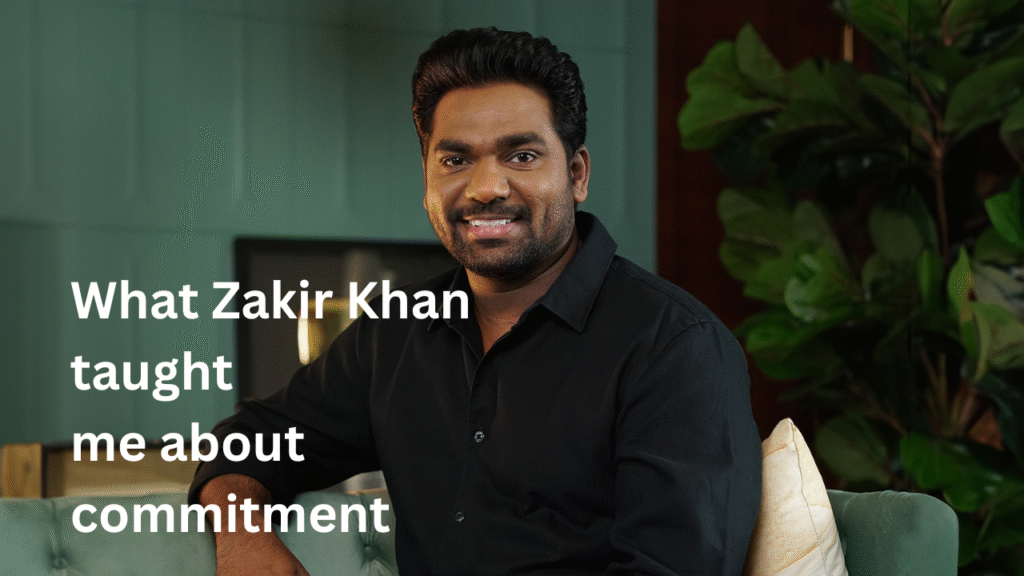
What Zakir Khan taught me about commitment

Desire vs. Commitment
I know you have a strong desire to become confident but guess what? Just having a desire is not enough. You have to put in the efforts. Confidence comes from taking action, not from just desiring it. Comedian Zakir Khan said once, “Agar aap kisi cheez ko puri shiddat se chaho.. to puri kainat ko ghan*a fark nahi padta.” You have to put in the efforts. There is no shortcut.  

Scroll to Top