Author name: Ziaur Rehman

Mindset

Belief vs. Doubt

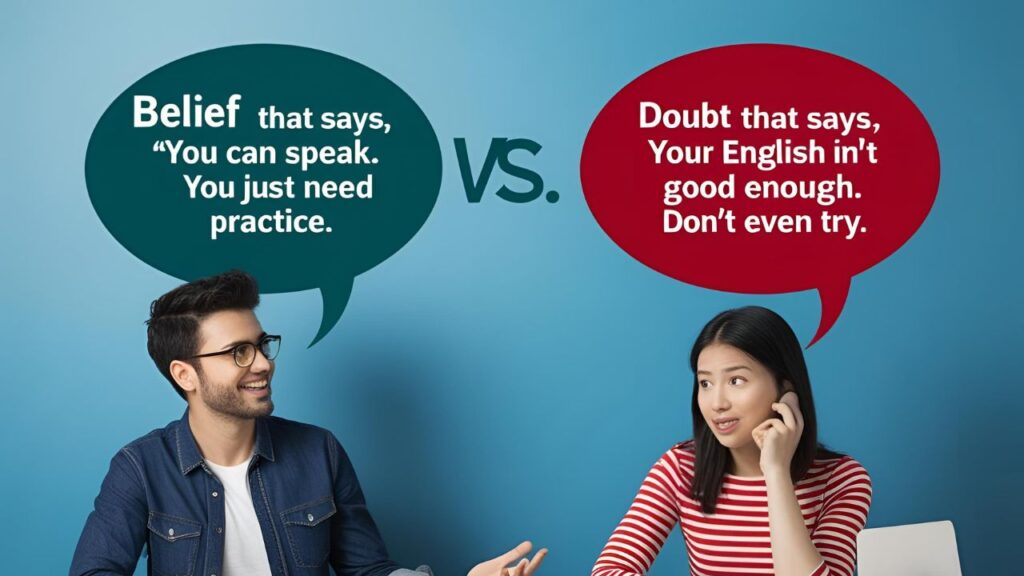
Belief is the voice that says, “You can speak. You just need practice.”Doubt is the voice that says, “Your English isn’t good enough. Don’t even try.” Both voices are real.Both will walk with you. But here’s what you need to know:Belief builds fluency. Doubt delays it.And the truth is—you don’t have to be free from doubt to begin.You just have to act in belief, even with doubt sitting beside you. In the Confluent Speaker journey, we don’t wait to feel confident.We speak first, and confidence follows.We make mistakes, and learning follows.We practice daily, and fluency follows. So when doubt says:“What if they judge you?”You reply:“What if I grow instead?” When doubt says:“Your grammar isn’t perfect.”You say:“I’m not aiming for perfect. I’m aiming for progress.” Fluency is not about flawless speech.It’s about flow. About freedom. About expressing yourself clearly, even when your English isn’t textbook-perfect. So hold on to belief. Even if it’s small today.Even if it’s just 5% belief and 95% fear.Let that 5% speak.Let that 5% practice.Let that 5% grow. Because inside you, there is already a Confluent Speaker.And every word you speak moves you one step closer.

Mindset

Independent Learning in the Age of AI — Start Now. Don’t wait.

I’ve always said this — I don’t feed you, I teach you how to cook. That’s been my approach since Day 1. Whether it’s my articles, my videos, or even my speaking practice sessions — the goal has never been to make you depend on me. My goal is to give you the tools, the mindset, and the systems so that you can become an independent learner. That’s what the Confluent Speaker journey is about. And now, with AI — especially tools like ChatGPT — the game has completely shifted. Earlier, you needed a teacher to explain grammar. Now, ChatGPT can explain the same grammar point in 10 different ways — until you understand it in your own way. Earlier, you had to wait for a class to get feedback. Today, AI tools can give you examples, corrections, practice conversations — instantly. But here’s the truth: you can learn more… or you can confuse yourself more. Because AI doesn’t solve everything. It’s powerful, yes — but only if you know how to use it. Only if you know how to ask, how to apply, how to reflect. That’s where self-learning comes in. I’ve always encouraged independence.Even in my sessions, I make you talk. I give you feedback on the go. I help you break your beliefs. I push you to see yourself differently. But I’ve also told you — don’t stop there. Learn how to learn. Build your own system. Explore your own path. Use everything I teach you as a starting point — not as a crutch. That’s why I’ve built resources, handbooks, story-based articles, audio content — not just to teach, but to make you think and take charge. In India, we face two big problems.A lack of highly trained English teachers — I’ve seen this up close.(I myself was a waiter working in weddings and parties in and around Mumbai. No fancy degree. I learned by doing. I still do.)Learners don’t know where to start. Especially in small towns and villages.I’ve spoken to so many — they have the fire. They have the desire.But they’re stuck. They don’t know what to do, how to begin, or where to go.So they wait — for a course, for money, for a teacher.But here’s what I say: don’t wait. Start today.Use free tools.Use your voice.Record yourself.Talk to ChatGPT.Ask questions.Repeat answers.Get clarity.Make mistakes.And then learn from them. Once you start learning on your own, then invest in a course that takes you beyond. But don’t wait for the course to begin the journey. This is the future.AI + Self-learning + Real-world speaking.That’s the new model. You are not weak. You are not behind. You are already fluent to some degree.Now it’s about progress. Now it’s about ownership. I’m still here to guide you. But I’m not here to carry you.Because you’re capable of walking your own path — with power, with confidence, with clarity. Welcome to the age of independent learning.It’s not just possible — it’s necessary. Let’s build it — together.Your coach,Ziaur Rehman

Knowledge, Uncategorized

10 Tips on AI & the Future of Language Learning

1. Don’t fear AI—train it to train you. AI is not your replacement. It’s your co-pilot. The more you interact with it, the more it learns your style, your goals, and your voice. 2. Use AI to practice speaking, not just typing. Voice-based AI tools now allow you to practice real conversations. Speak to it like a coach. Ask it to challenge you. Fluency grows when you speak, not just read. 3. Personalize your learning journey. With AI, you don’t need a one-size-fits-all syllabus. Ask for examples that match your work life. Get grammar explained in your language. Learn like you, not like everyone else. 4. Feedback in real time = faster growth. AI can now correct your pronunciation, sentence structure, and tone instantly. Use it like your daily fluency mirror. 5. Build your AI language lab. Create prompts that serve as your personal trainer—conversation partner, vocabulary coach, accent checker, or writing editor. Your AI can wear many hats. 6. Go beyond English. Learn how to learn. Once you learn how to use AI to master English, you can use the same approach to learn anything. Language is just the beginning. 7. Mix AI with human wisdom. AI gives instant answers. A coach gives insight. Combine both. Use AI for practice, and human mentors for mindset, depth, and refinement. 8. Focus on communication, not perfection. AI can help you sound fluent, but you must make it sound real. Real fluency is about connection, not correctness. 9. Start creating, not just consuming. Use AI to write stories, create roleplays, generate practice dialogues. Don’t wait for material. Make your own. That’s where true fluency is built. 10. The future speaker is not just fluent—they’re Confluent. AI can help you speak well. MKPF ensures you speak with clarity, courage, and conviction. Together, you become unstoppable. — — — — — — — — — — — — — — —  AI is not just a tool. It’s a turning point. Use it. Speak with it. Grow through it. Because the future belongs to those who know how to learn—with tech, with purpose, and with presence. — — — — — — — — — — — — — — —

Mindset

The Momentum Mindset: Keep Speaking, Keep Moving

What stops most people from becoming fluent speakers? It’s not a lack of vocabulary, grammar, or accent. It’s hesitation. It’s stopping. Fluency isn’t something you reach after years of perfecting your English. It’s something you build in motion. But most learners do the opposite. They wait. They overthink. They pause too much. And every time they stop, they lose momentum. This is where the Momentum Mindset changes the game. Fluency is Not a Stage—It’s a Flow Most people believe fluency comes in levels. “First, I’ll learn all the rules. Then I’ll practice a little. After that, I’ll feel confident.” But that’s not how real learning works. Dr. Stephen Krashen’s Input Hypothesis suggests that language is acquired not by memorizing rules but by engaging with language in real, meaningful ways. Learners who stay in motion—speaking, making mistakes, and self-correcting—develop fluency faster than those who passively study. Language acquisition is also deeply tied to procedural memory, the kind of memory that helps you ride a bicycle or drive a car. You don’t learn these skills by reading about them; you learn by doing. The same applies to speaking. Momentum Mindset is about building fluency through continuous engagement, not waiting until everything feels perfect. What is the Momentum Mindset? Momentum Mindset is the belief that fluency is built by staying in motion—by speaking, thinking, and engaging with English continuously, without hesitation. It’s about training your brain to prioritise speed over perfection, action over doubt. Think of it like cycling. If you keep moving, balance is easy. If you stop, you wobble and fall. Most learners struggle with fluency because they stop too often—pausing to correct themselves, hesitating before speaking, or waiting for the “right” words. But fluency isn’t about finding the perfect words. It’s about keeping the conversation going, even when it’s not perfect. A Momentum Mindset shifts your focus from correctness to consistency. The more you speak, the better you get. The more you hesitate, the harder it becomes. Simple. Why Do Learners Stop? The Hesitation Loop Most learners get stuck in what I call The Hesitation Loop: This cycle is reinforced by fear of judgment, a common psychological barrier. Research on the affective filter hypothesis shows that anxiety, low confidence, and fear of making mistakes block language acquisition. The higher the stress, the harder it is to recall words and structure sentences. Momentum Mindset breaks this loop by shifting the focus from perfection to progress. How to Apply the Momentum Mindset Fluency is a Moving Train—Get On It Most learners wait for fluency to “happen.” But that’s like standing on the platform while the train speeds away. You have to jump on the train while it’s moving. If you stop, hesitation wins. But if you keep speaking, fluency is inevitable. Fluency isn’t a destination. It’s continuous movement. Keep speaking. Keep moving. Keep the momentum alive. Your coach,Ziaur Rehman

Mindset

✨The Fluency Poem ✨

You don’t need a classroom, a book, or a guide,English is waiting—right by your side. In whispers, in movies, in songs that you hear,In thoughts that you think, it’s already near. Not in perfection, not in delay,But in small steps you take each day. Speak to yourself, let your words flow,Mistakes will come, but let them go. Fluency isn’t a place you arrive,It’s how you use it—how you strive. So read, so listen, so dare to try,You’re already closer—just reach for the sky. 🌍✨

Feedback

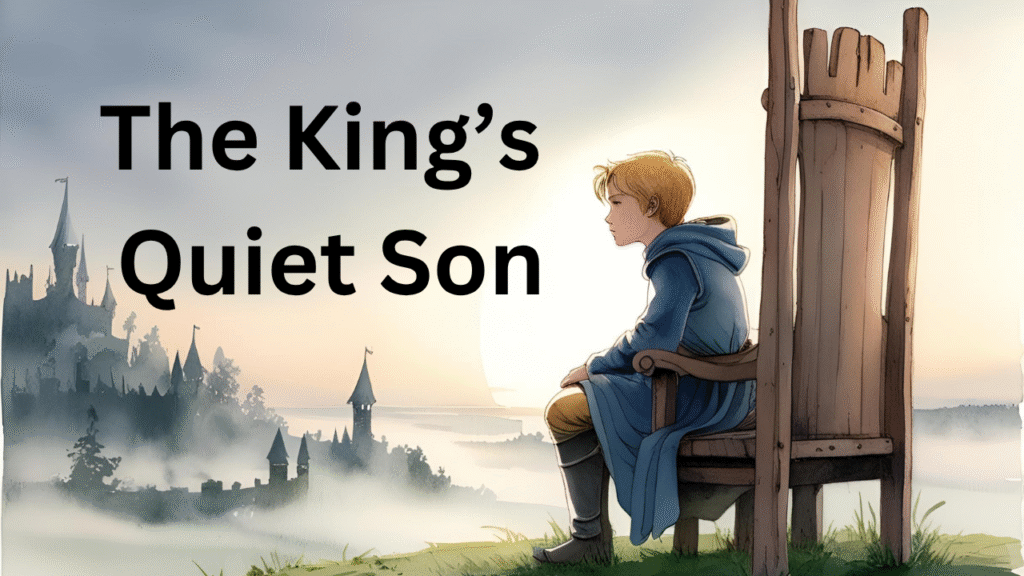
The King’s Quiet Son

Once upon a time, there were two princes—Adrian and Marcus. Adrian was the older brother. He was smart and had many good ideas, but he spoke too softly.When Adrian spoke in the court, no one could hear him clearly. The ministers had to ask him to repeat himself. Soldiers didn’t know if they should follow his orders. Even when Adrian had the best plans, no one listened carefully because his voice was too quiet. Because Adrian’s voice was soft, people were always unsure. Sometimes they didn’t understand his ideas. Other times, they didn’t take him seriously. He tried to speak louder, but it didn’t work. It was like his words were lost. Marcus, the younger brother, was different. His voice was loud and clear. When he spoke, people listened. He wasn’t always the smartest, but his words were strong. They trusted him because his voice was easy to hear. One day, the kingdom faced a big problem. The king was sick, and enemies were coming to attack. The court looked to Adrian for help. This was his chance. Adrian stood up to speak. He had a perfect plan in his mind, but his voice was still soft. People had to ask him to speak louder. The ministers couldn’t hear him well. The soldiers didn’t feel sure about what to do. No one felt confident. Then Marcus stood up. He didn’t have the best plan, but his voice was strong and clear. He said, “We will fight together and win!” The people could hear him. The soldiers followed him. Everyone felt confident. They won the battle. Adrian’s plan was forgotten because his voice didn’t make people believe in it. Why Your Voice MattersIn this story, we see how important it is to speak clearly and loudly. Let me give you a few more examples to explain why. In a Classroom:Imagine you are in a classroom. The teacher asks a question, and you have the answer. But you speak so softly that no one hears you. What happens? You lose the chance to share your answer. But if you speak clearly and with confidence, everyone will hear you, and they will take you seriously. They will connect with you. In a Job Interview:If you are in an interview and you speak too quietly, the interviewer may think you are not confident. But when you speak clearly, with a strong voice, the interviewer will know you believe in yourself and your skills. In a Group Discussion:In a group, if you speak softly, others may ignore you. They might not hear your ideas. But when you speak loudly and clearly, people listen. They start to respect your opinions. My Feedback:Speaking softly causes problems. People don’t hear you clearly. They don’t understand you, and they don’t feel confident in your ideas. But speaking loudly and clearly removes those problems. When your voice is strong, people listen. Your ideas become more powerful because your voice shows your confidence. You don’t need perfect grammar or vocabulary to speak clearly. What matters is that you speak with confidence, so people can hear and understand you. Start practicing speaking loudly and clearly. Your words will have more impact, and people will listen to you more. I hope this story stays with you.

Mindset

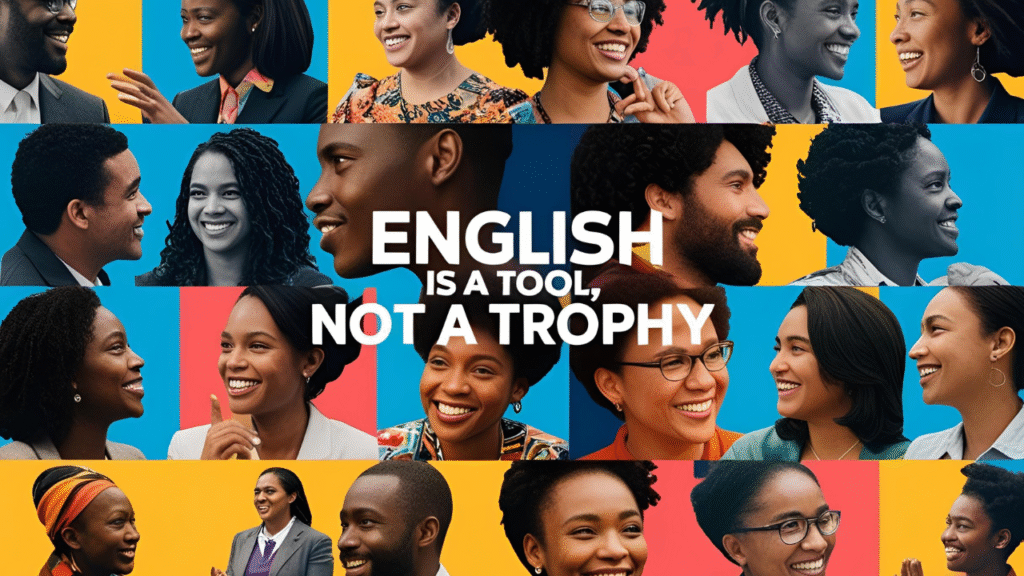
English Is A Tool, Not a Trophy

Have you ever looked at someone speaking fluent English and thought, “I wish I could speak like that”? Or perhaps you’ve felt stuck, believing that without perfect grammar or a native accent, you’ll never measure up. If that sounds familiar, let me tell you this: English is not a trophy to display; it’s a tool to use. And like any tool, its value comes from how well you use it to build, connect, and grow. Think about it. A carpenter doesn’t keep a hammer to show off its shine. They use it to create something meaningful. Similarly, English is meant to help you express your ideas, share your stories, and connect with others. It’s not about showing the world how perfect your grammar is; it’s about communicating effectively and confidently. This is exactly what I teach in my sessions also. The emphasis is on progress, not perfection. Every learner is already fluent to some degree. Whether you can have a simple conversation or share your thoughts on complex topics, you’re already on the path. Your fluency grows when you use English actively—not by treating it as a trophy to keep safe, but as a tool to engage with the world. Mindset: Stop Chasing Perfection The first step is understanding that fluency doesn’t mean speaking like a native speaker. Fluency means being able to express yourself with confidence. In one of my sessions, I met a gym trainer who felt insecure about their English. They knew all the exercises and could explain them perfectly in their native language but hesitated in English. When we shifted the focus from “perfect sentences” to “practical communication,” they started engaging clients in English effortlessly. It wasn’t about flawless grammar; it was about connecting with people. Knowledge: Practical, Not Theoretical Let’s face it—memorizing endless grammar rules or fancy vocabulary won’t make you fluent. What matters is applying what you learn in real situations. Imagine learning to ride a bike. Would you spend hours reading about it or just get on the bike and start pedaling? Fluency works the same way. During a recent session, a participant shared how they learned phrases from Mumbai’s billboards and railway announcements. Those phrases helped them navigate daily conversations, proving that fluency is built from practical, everyday knowledge. Feedback: Your Fastest Growth Tool Feedback isn’t criticism; it’s guidance. When you receive corrections on-the-go, you’re not being judged; you’re being supported. One of my learners—a lawyer—once said, “I’m so glad you corrected me while I was speaking. I’ll never forget that.” It’s these small adjustments that lead to big improvements. Practice: Speak First, Improve Later You don’t need to wait until you feel “ready” to speak. Readiness comes from speaking. One of the most common fears I see in learners is the fear of making mistakes. But here’s the truth: mistakes are stepping stones to growth. In my group sessions, I always encourage participants to speak first. Whether it’s a discussion on a trending topic or answering a simple question, the goal is to start talking. Real-time corrections and feedback make the process more effective—and less intimidating. The Journey, Not the Trophy So, the next time you feel tempted to see English as a status symbol or something to show off, remind yourself that it’s just a tool. And like any tool, its power lies in how you use it. Use it to tell your story. Use it to connect with others. Use it to achieve your dreams. The carpenter doesn’t get praised for the hammer they own but for the furniture they create. Likewise, your fluency will shine through the conversations you have and the connections you make—not the perfection you chase. Remember, you’re already fluent in your way. It’s time to build from there. English is not a trophy; it’s a tool. Let’s use it to create something extraordinary. Your coach,Ziaur Rehman
Uncategorized

This Is Why I Do What I Do

Today was a moment I’ll never forget. I got a sore throat in the evening and knew I couldn’t host my 8.30pm session. So, I sent a quick message to Aarti, one of our Conversation Club members from 8.30pm batch, asking if she could host the session today. Her reply? “Sure, I can. I will try to do my best.” No hesitation. No overthinking. No self-doubt. Just a simple yes. She even added, “I will start at 8:30.” That’s it. That’s the growth I’m talking about. For her, this was a huge moment—saying yes without second-guessing herself. And for me, it was just as big. Because this is exactly who and what my people become. Confident people. People who have self-belief. It’s not just about speaking English fluently; it’s about stepping up, taking charge, and saying, “Yes I can.” Aarti didn’t just say yes to me; she said yes to herself. And that’s the win I celebrate the most. I love to see people grow into confident, independent speakers who trust themselves. And moments like these remind me why I do what I do. To Aarti and every single one of you who chooses progress over perfection— I am so proud of you and I respect you for the belief you have in your own abilities. Here’s to more moments like this. ❤️

Practice

“Dream Small”

Sometimes your dream is sooooooo big that it becomes overwhelming for you. You want to learn English but you are dreaming the end goal when you are super fluent and extremely confident. That’s the image that your mind has created. There is a problem though. Now, speaking at a lower level makes you feel uncomfortable. You want everything to be easy, perfect and smooth. You are dreaming big. The very goal of the dream is stopping you from achieving the dream. You know that you don’t have to do it today because you will do it when you have good amount of free time. You will do it once everything is settled. Things will never be settled. Life keeps on flowing like rivers, like oceans, like mountains, like trees and flowers. “Dream small” As a coach I have two choices every day. I can dream big and visualize how one day I will be a world class coach and how there will be millions of followers on my social media and how I will speak at so many events. But these things put me in competition with all the top coaches in the market. These things overwhelm me and scare me because the dream is too big that I will stop functioning only.  I have another way also to look at it. I keep it small. instead of worrying about massive followers, huge workshops, and big events, I plan my day around who I can serve today. I focus on how many sessions I have to conduct TODAY. I focus on how I can interact with my online community  through quizzes and content TODAY. My everything is about today. And I do it every day. I will still reach the goal. James Clear, the author of Atomic habits, has an article on his website that talks about “Foucussing on systems instead of goals”. It’s an amazing article. It talks about importance of building every day habits and systems that help you move ahead in life. He says you can achieve the goal without even worrying about the goal.  This suddenly becomes easier. I keep things small. Achievable. Instead of dreaming about how one day I will have hundreds of blogs on my website, I focus on the blog that I can write today. Rather than planning a series of videos for my instagram, I create videos as and when needed. Wherever there’s a common query from my students, I answer it in a video. This way I don’t have to worry about hiring a video company or a huge to do list. I just have to make a small video today and share. That’s it. Keeping it small.  Just take care of your today. I read somewhere “take care of days and your years will take care of themselves”

Scroll to Top